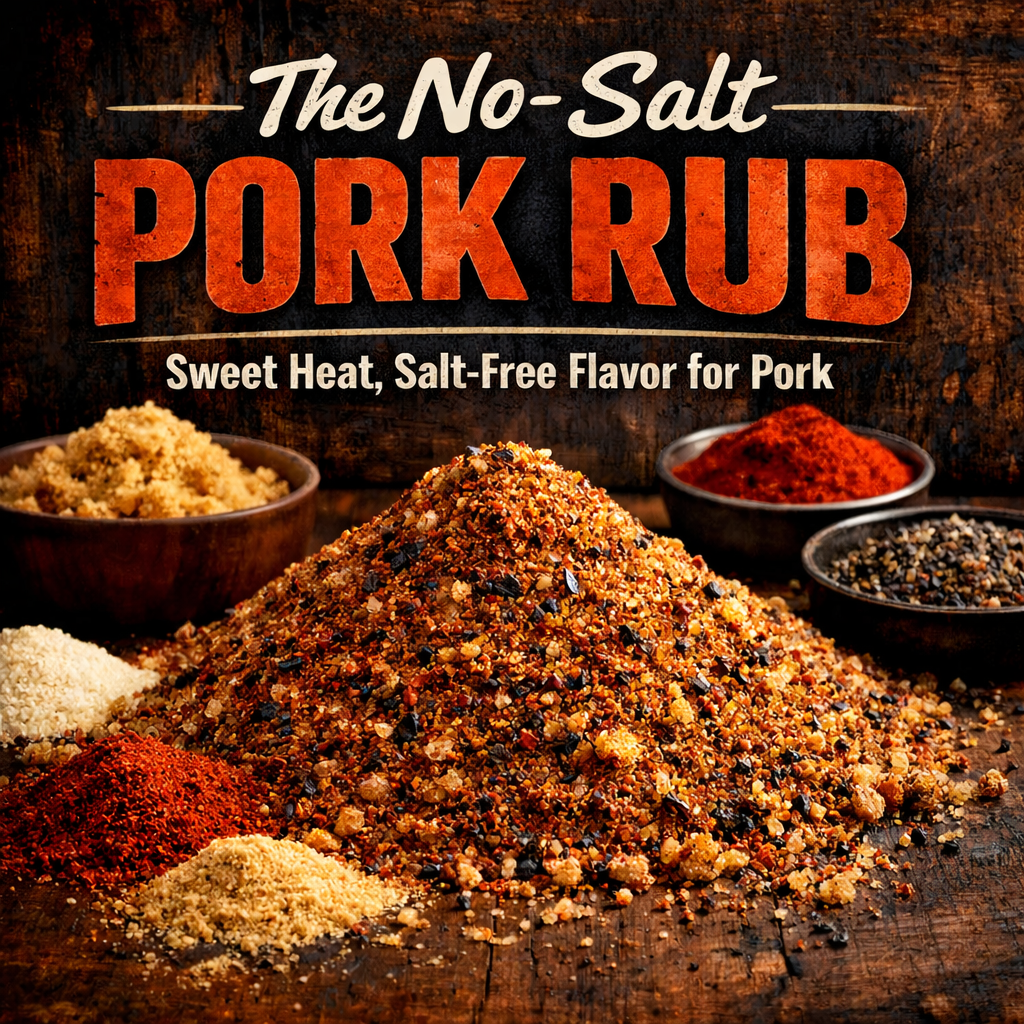
Every griller needs a reliable pork rub that delivers consistent flavor without overcomplicating the process. For me, this is my No-Salt Pork Rub. It’s a balanced blend of sweetness, color, and mild heat that’s built specifically for pork.
This rub is intentionally salt-free so you can control your seasoning separately. I typically dry brine first, then apply this rub to build flavor without risking oversalting.
It’s simple, repeatable, and designed to work across a wide range of pork cooks.
No-Salt Pork Rub Recipe
Ingredients
- 4 parts brown sugar
- 2 parts paprika
- 1 part black pepper
- 1 part garlic powder
- 1 part onion powder
- ½ part chili powder
Ratio: 4 : 2 : 1 : 1 : 1 : ½
(easily scaled up or down—just keep the ratio consistent)
Scaling the Recipe
Basic batch (example):
- 4 tbsp brown sugar
- 2 tbsp paprika
- 1 tbsp black pepper
- 1 tbsp garlic powder
- 1 tbsp onion powder
- ½ tbsp chili powder
Double batch:
- 8 tbsp brown sugar
- 4 tbsp paprika
- 2 tbsp black pepper
- 2 tbsp garlic powder
- 2 tbsp onion powder
- 1 tbsp chili powder
Large batch:
- 1 cup brown sugar
- ½ cup paprika
- ¼ cup black pepper
- ¼ cup garlic powder
- ¼ cup onion powder
- 2 tbsp chili powder
(Pro tip: Use a kitchen scale for even more accuracy and consistency.)
What This Rub Is Designed to Do
This isn’t just a mix of spices. Each ingredient plays a role in how your pork turns out.
- Brown Sugar (4 parts): Drives caramelization and helps form bark
- Paprika (2 parts): Builds color and mild sweetness
- Black Pepper (1 part): Adds bite and balances the sugar
- Garlic + Onion (1 part each): Provide a savory backbone
- Chili Powder (½ part): Adds subtle background heat
👉 The goal is balance. Sweet, savory, and heat working together without one overpowering the others.
Why “No-Salt” Matters
This rub is built without salt on purpose.
Salt is one of the most important parts of grilling, but it’s also one of the easiest ways to ruin a cook if you don’t control it.
By keeping salt separate, you can:
- Dry brine ahead of time for better moisture retention
- Adjust salt levels based on the cut of meat
- Avoid stacking too much sodium when layering flavors
👉 My rule of thumb: Salt is a step. The rub is a layer.
Instructions
Combine Ingredients:
In a large bowl or shaker, mix all ingredients thoroughly to ensure even distribution.
Storage:
Transfer to an airtight container and store in a cool, dry place.
How I Use It
After dry brining:
Apply an even coat before the meat goes on the grill.
For pork cooks:
This rub works especially well on ribs, pork shoulder, and thick-cut pork chops.
As a base layer:
You can run this rub by itself, or build on top of it with additional spices depending on the cook.
Ways to Adjust the Flavor
Once you understand the ratio, you can start dialing it in to your preference.
- Want more sweetness? Increase brown sugar slightly
- Want more heat? Add a little more chili powder
- Want more bite? Increase black pepper
This is where you move from following recipes to controlling flavor.
Essential Tools for Crafting Your Seasoning Blends
To create and store your homemade seasoning blends effectively, consider the following tools:
Airtight Spice Jars:
Keeps your rub fresh and prevents clumping from moisture.
Measuring Spoons or Scale:
Ensures consistency every time you make a batch.
Mixing Bowls:
Gives you space to fully combine ingredients without uneven pockets.
Seasoning Shaker:
Helps apply the rub evenly across the meat for better coverage.
Enhance Your Flavor System
If you want to go deeper into how seasoning actually works, including layering techniques and when to apply each element, check out my Ultimate Grilling Seasoning Guide.
👉 Discover the Ultimate Grilling Seasoning Guide Here
Final Thought
Most people chase better results by trying new recipes.
The real shift happens when you start understanding how flavor is built and controlled.
This rub is designed to give you a consistent starting point so you can focus on what actually matters, your process, your fire, and your execution.