Bringing Back the Backyard Tradition
Back in the 80s and 90s, most backyard cooks didn’t have pellet smokers, Bluetooth thermometers, or shelves full of rubs. You had a simple charcoal grill, maybe a Weber kettle, maybe a homemade barrel, a bag of Kingsford, and your uncle’s mop sauce.
That mop sauce wasn’t a recipe you found online. It was handed down, often by memory, and made with whatever you had in the kitchen. A little vinegar, a little spice, a splash of oil and somehow, it turned ribs into something special.
That’s what this recipe brings back. The simplicity. The feel. The flavor of old-school Alabama barbecue.
💡 If you’re still running a classic Weber 22-inch kettle, you’re keeping that tradition alive. It’s one of the most versatile charcoal grills ever made, and it’s still my go-to for this kind of cook.
👉 You can check it out here: Weber Original Kettle 22-Inch Charcoal Grill
🥣 Old School Alabama Mop Sauce (Microwave Version)
Ingredients:
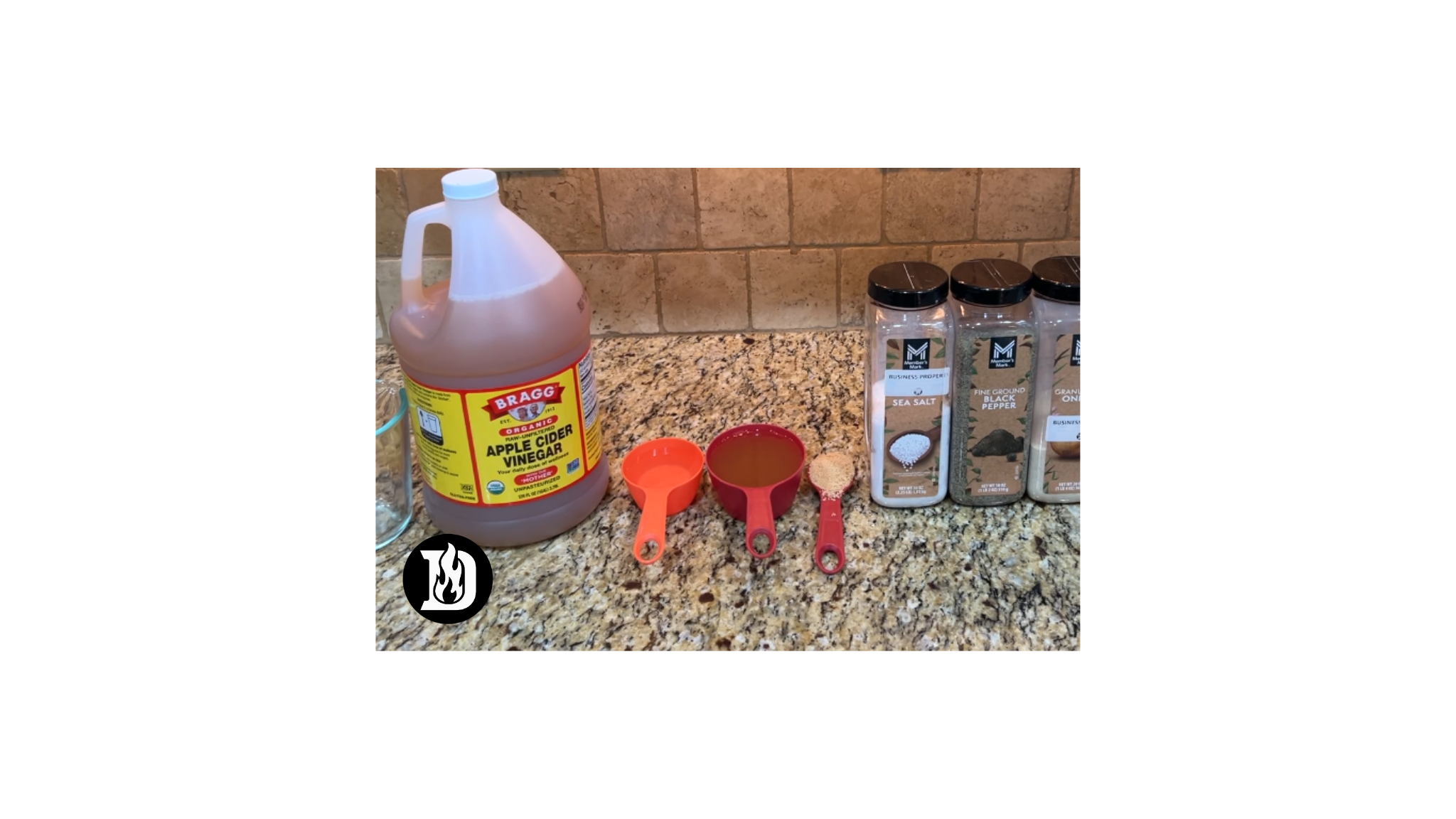
1 cup apple cider vinegar (or distilled white vinegar for a sharper bite)
½ cup water
½ to 1 teaspoon sea salt (optional — go lighter if your ribs are already salted)
1 tablespoon brown sugar (or white sugar if that’s what you’ve got)
1 teaspoon fine black pepper
1 teaspoon granulated garlic
1 teaspoon granulated onion
½ teaspoon crushed red pepper flakes (adjust to taste)
1 tablespoon vegetable oil (or olive oil — whatever’s in your pantry)
(Optional) 1 teaspoon Worcestershire sauce for that deep, savory note
🔗 Gear Tip:
Warm this up in a glass Pyrex measuring cup — it’s easy to pour and microwave-safe.
👉 Here’s the one I use: 2 or 4-Cup Pyrex Measuring Cup
🔧 Directions
Combine all ingredients in a microwave-safe glass measuring cup or small bowl.
Microwave for about 45–60 seconds. Just until the sugar and salt dissolve.
Stir well before each use since the seasonings will settle to the bottom.
Mop lightly throughout the cook. Especially when flipping ribs, to keep the surface moist and build flavor layer by layer.
Yield: Enough for 2–3 slabs of ribs.
🔗 Gear Tip:
You can use a traditional cotton mop or a silicone brush. Both work great for this sauce.
💭 Why Mop Sauce Still Matters
Back then, a mop wasn’t just flavor. It was feedback. If the sauce evaporated too fast, your fire was running hot. If it lingered, you knew the grill was cooler. It taught you how to read your fire long before digital thermometers ever existed.
That’s what made those cooks special. You learned to listen, to watch, and to feel the process. That’s what we’re holding onto here.
🧰 Shop the Setup
✍️ Final Thoughts
This isn’t a sauce you slather on at the end. It’s one you build flavor with along the way. Simple ingredients. Pure technique. The kind of cook that teaches you as much as it feeds you.
If you want to dig deeper into fire management and grill control, check out the Fire Management Guide. It’s where we take this same old-school knowledge and break it down step-by-step for modern grillers.